Structural eradication of bed bugs across Richland County demands an uncompromising, dual-mechanism methodology. In historic bungalows throughout Shandon, Earlewood, and Elmwood Park, vintage heart-pine flooring, wide…
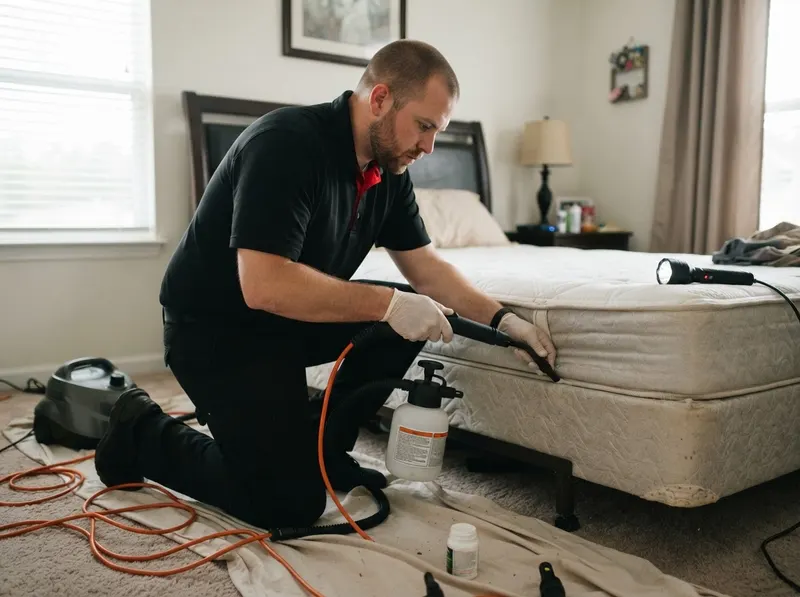
Structural eradication of bed bugs across Richland County demands an uncompromising, dual-mechanism methodology. In historic bungalows throughout Shandon, Earlewood, and Elmwood Park, vintage heart-pine flooring, wide floorboard margins, and tongue-and-groove lath provide micro-crevices where bed bug populations avoid standard spray applications. CedarWing Extermination deploys an integrated approach combining forced-air convection heat with EPA-registered residual chemistries registered via the EPA Pesticide Product and Ingredient System. Thermal remediation elevates the ambient target envelope between 120°F and 135°F, adhering to standards outlined by the Virginia Department of Agriculture and Consumer Services. This temperature threshold denatures insect cellular proteins and guarantees egg mortality without causing structural warping. Technicians monitor heat distribution using industrial thermocouple sensors compliant with standards from the National Institute of Standards and Technology, ensuring heat penetrates dense upholstery, structural wall plates, and deep electrical utility conduits.
Thermal treatment forces active insects to seek thermal relief, which is why isolated heat without chemical barriers carries perimeter risk. CedarWing Extermination resolves this by establishing localized, non-repellent insect growth regulators and desiccating dusts such as amorphous silica gel, certified under Clemson University Regulatory Services guidelines for South Carolina pest technicians. These chemical barriers are injected into utility access points, behind electrical outlet plates, and along baseboard tracks prior to heat deployment. In modern split-levels across Forest Acres and Heathwood, as well as rental units in Rosewood and Olympia near the University of South Carolina, persistent crawlspace moisture and riverfront humidity from the Congaree River basin amplify insect survival rates. Integrating chemical residuals ensures that any stragglers traversing structural margins during cool-down encounter lethal residues, backed by application methodologies detailed by the Purdue University Department of Entomology.
The decision between localized spot chemical application and dual thermal-chemical elimination hinges on infestation spread and architectural density. A localized chemical treatment suits a single contained mattress sighting discovered within 48 hours of exposure. However, multi-room infestations, shared-wall duplexes, or older residential construction throughout Cottontown and Lake Katherine require whole-structure thermal soak combined with perimeter chemistries. The trade-off is mechanical prep time: property occupants must remove aerosol cans, wax candles, and temperature-sensitive electronics according to safety parameters from the Consumer Product Safety Commission, while vacating the structure for approximately 8 hours. Properties adjacent to industrial traffic or university housing corridors benefit from this protocol because it eliminates pesticide-resistant strains, an ongoing urban pest trend documented by the Centers for Disease Control and Prevention and the National Pest Management Association. Structural remediation protocols align with occupational containment practices published by the Occupational Safety and Health Administration to ensure indoor air quality remains safe after cooling.
Every job gets a firm, written price after a free on-site visit.
Tell us about your bed bug thermal and chemical elimination job in columbia and we'll send a clear, written quote, usually the same day.
 CedarWing Extermination