Columbia's river valley topography and summer relative humidity levels routinely exceeding 70 percent accelerate structural infestations of formicidae. Historic residential pockets such as Shandon and Cottontown…
Columbia's river valley topography and summer relative humidity levels routinely exceeding 70 percent accelerate structural infestations of formicidae. Historic residential pockets such as Shandon and Cottontown feature heart-pine framing, broad crawlspaces, and dense mature oak canopies that drop carpenter ants directly onto fascia boards. In slab-on-grade developments across Forest Acres and Lake Katherine, odorous house ants exploit foundation settlement cracks to reach kitchen pantry moisture. According to morphological identification keys from the Clemson Cooperative Extension, identifying species biology prevents the accidental budding of polygyne colonies, a common failure mode when over-the-counter pyrethroid sprays scatter worker ants into surrounding wall voids.
Structural protection demands strict species differentiation. In neighborhoods near the Congaree riverbank such as Olympia, moisture-laden crawlspaces often harbor carpenter ants (Camponotus pennsylvanicus). These wood-destroying insects excavate structural joists along moist subfloors, producing distinct frass shavings that resemble pencil sharpenings. Guidance from the USDA Agricultural Research Service indicates that surface insecticides simply repel foragers without impacting satellite queens sequestered deep within wall framing. CedarWing Extermination deploys structural void injections using fipronil and dinotefuran formulations that conform to EPA pesticide regulations, allowing workers to carry active, undetectable materials back to the primary reproductive core without triggering defensive nest dispersion.
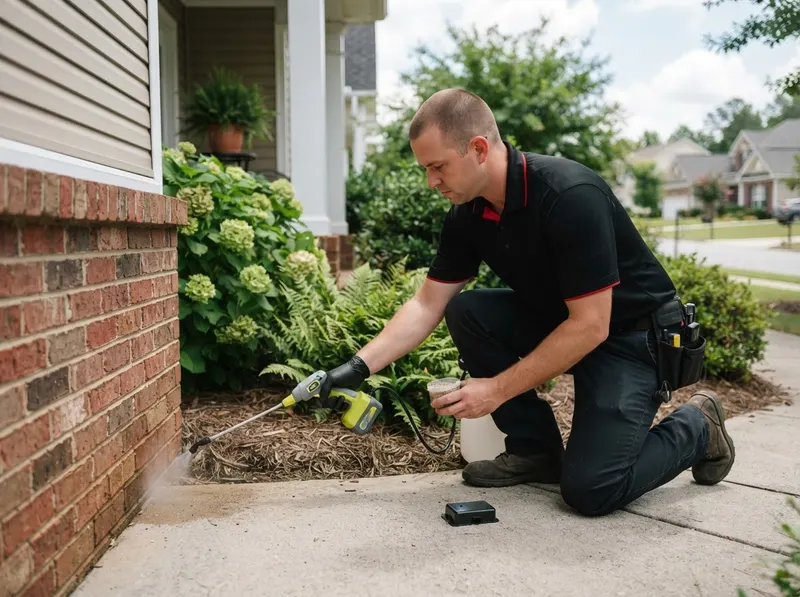
Outdoor perimeters require mechanical exclusion alongside biochemical barriers. Clay soils common throughout Heathwood and Earlewood bake into dense, cracked crusts during midsummer dry spells, creating direct subterranean highways beneath foundation footings. Technicians apply microencapsulated exterior liquid zones conforming to structural guidelines from the National Pest Management Association. These low-odor perimeter applications do not displace residents from living areas and dry completely within one hour under normal ambient conditions. Tree limbs hanging within six feet of roof shingles in wooded Elmwood Park properties are flagged for trimming to break bridging corridors, supporting non-chemical physical exclusions documented by the South Carolina Department of Health and Environmental Control.
Standard bait systems fail when applied without accounting for seasonal macronutrient shifts. Spring colonies require protein-heavy lipid carriers to support egg-laying queens, while late-summer foragers prioritize carbohydrates to fuel intensive trail maintenance. Operational standards managed under OSHA chemical handling protocols and ecological guidelines from the U.S. Fish and Wildlife Service ensure that bait placements remain locked inside tamper-resistant stations out of reach of domestic pets and children. In situations involving landscaped turf in Rosewood, technicians coordinate soil treatments around subterranean utility runs mapped via South Carolina 811 to prevent perimeter disruption. Every property baseline remains documented through the structural standards of the Entomological Society of America Certification Corporation, ensuring full mechanical and biological containment for every residential floor plan.
Every job gets a firm, written price after a free on-site visit.
Tell us about your ant control for your columbia home job in columbia and we'll send a clear, written quote, usually the same day.
 CedarWing Extermination